
Last updated October 15, 2026
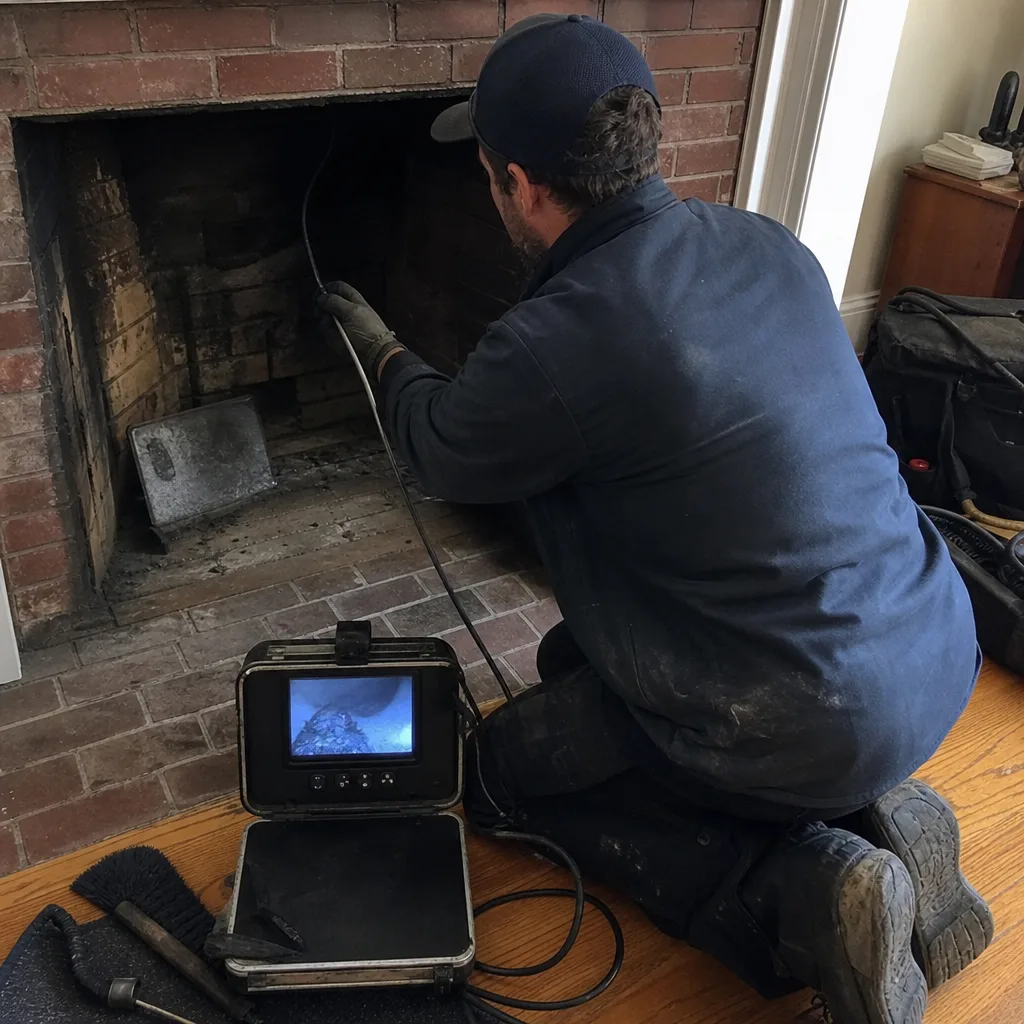
 Sweep & inspection
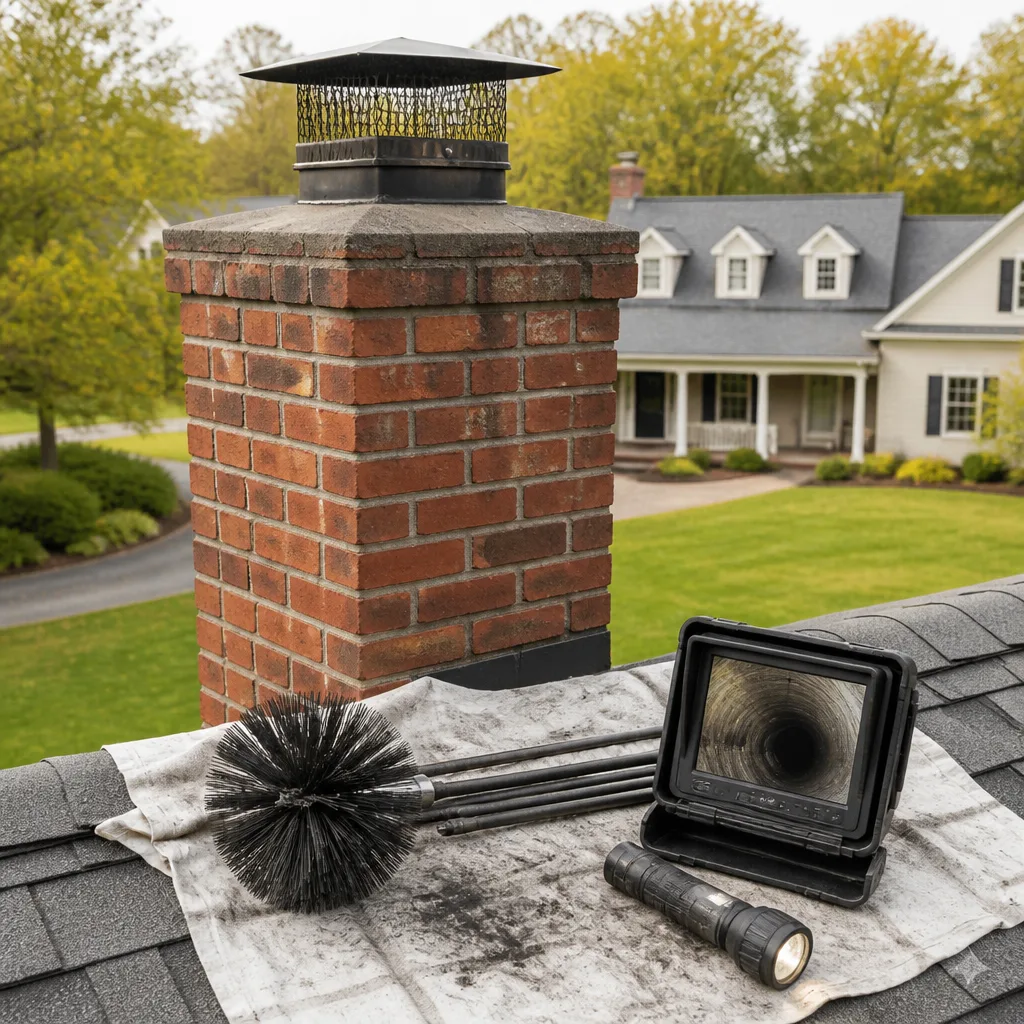
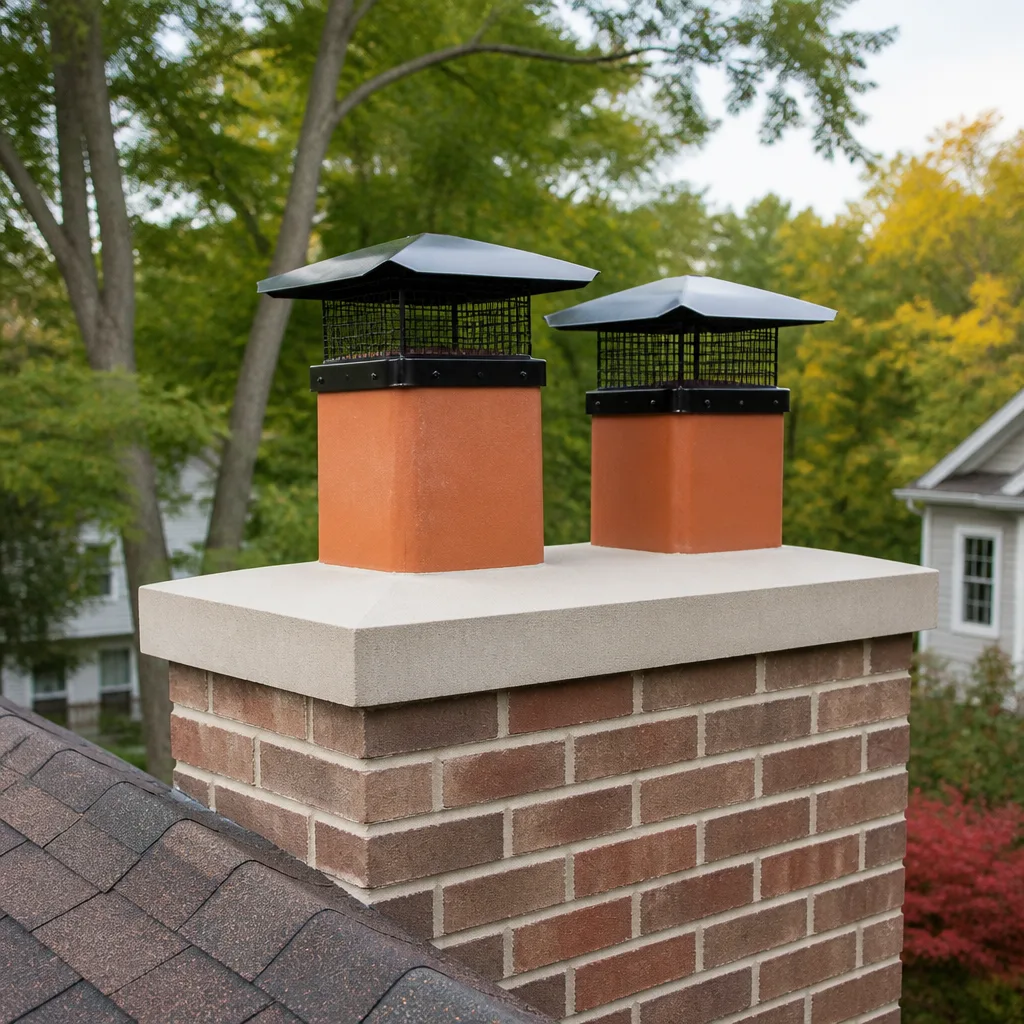 Caps & crowns
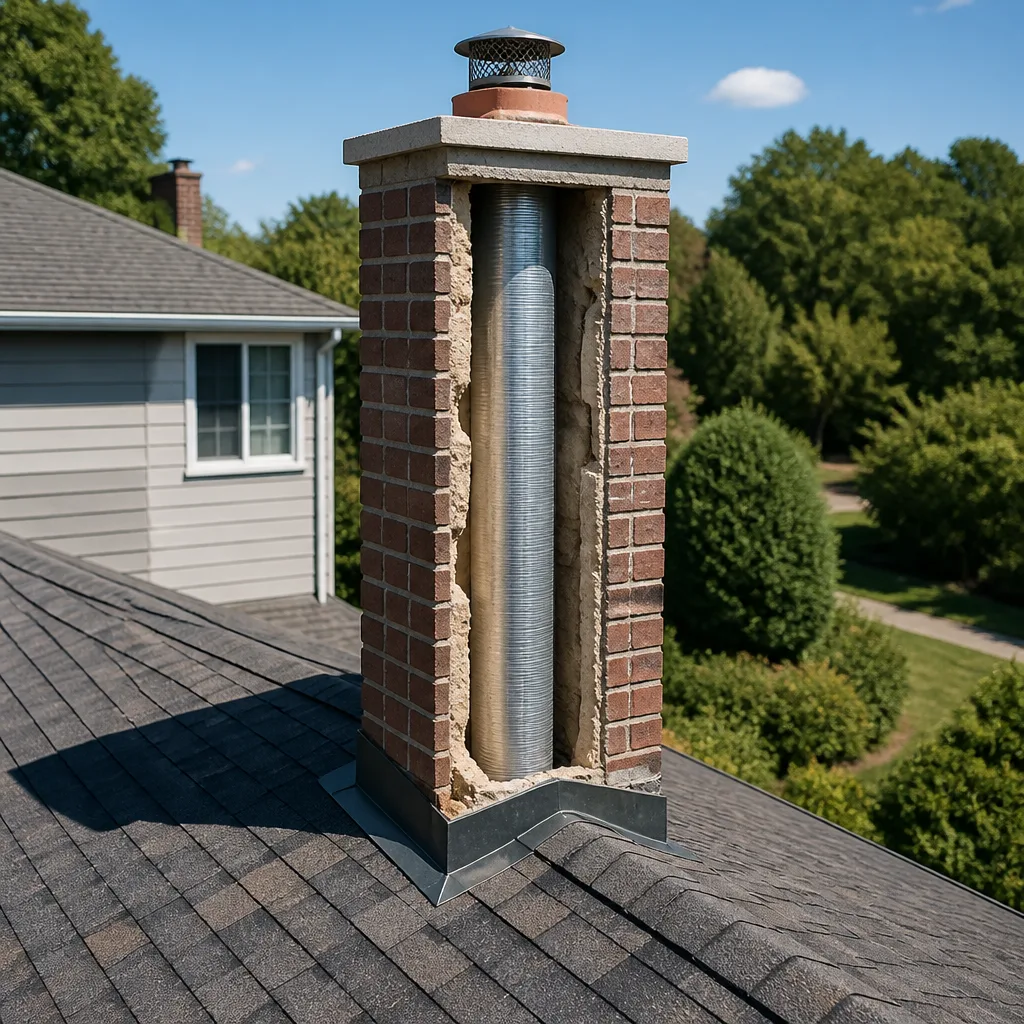 Flue relining
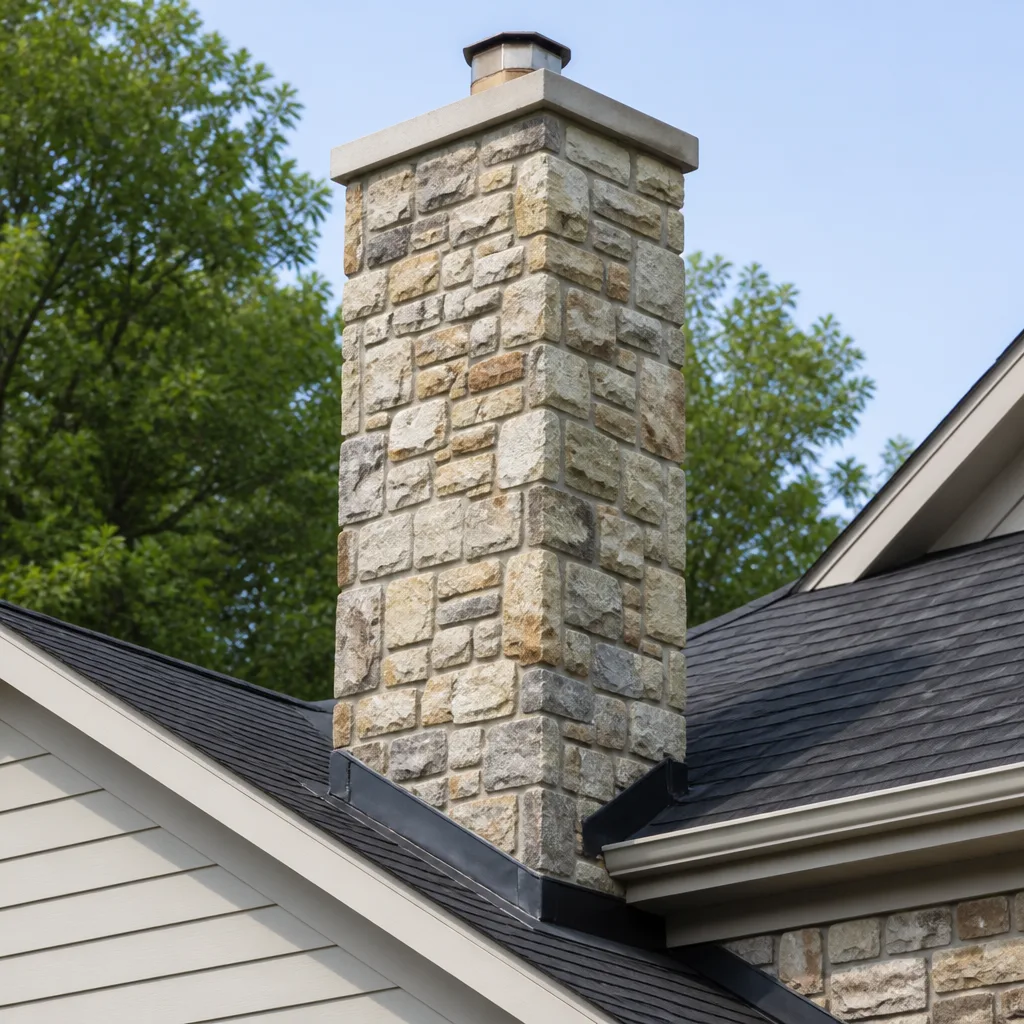 Masonry repair
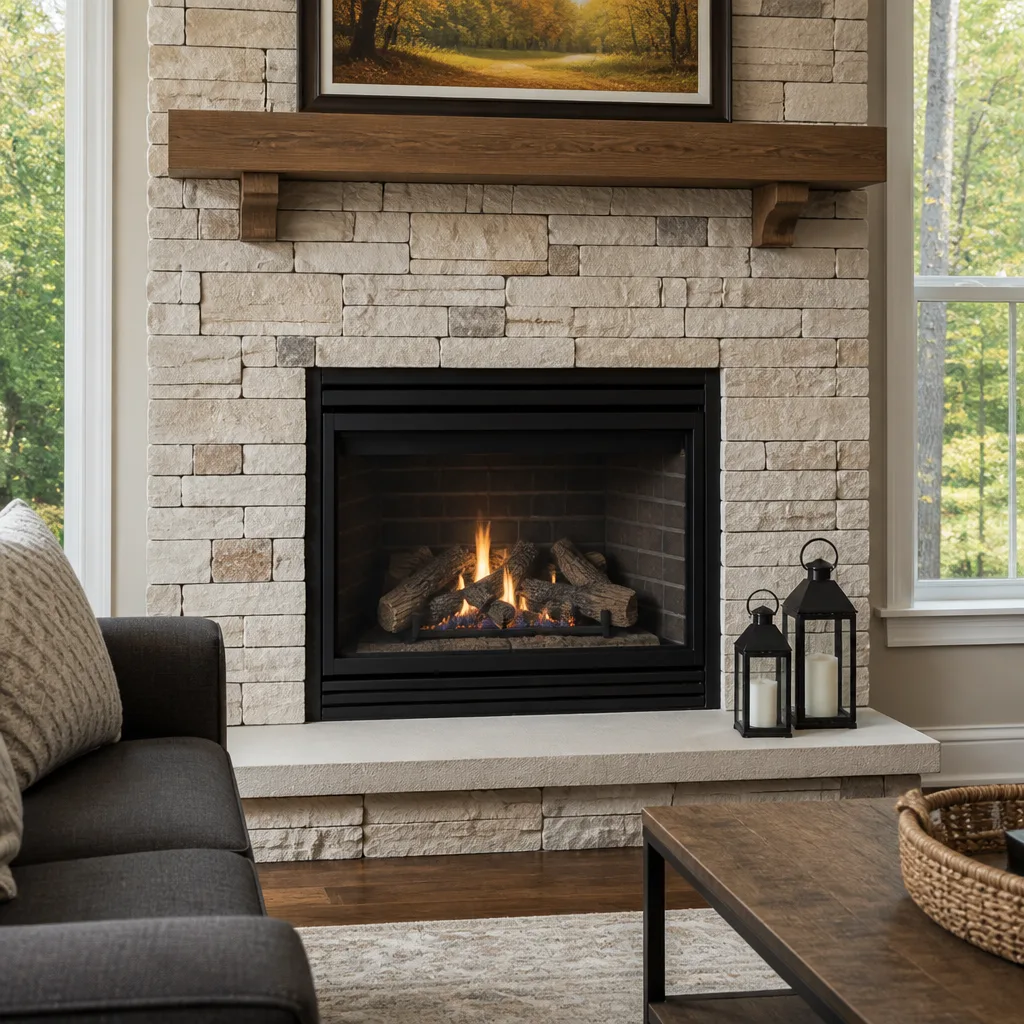 Gas fireplace service
Level 1 sweep and inspection to the NFPA 211 annual standard - flue, crown, cap, and flashing checked and photographed
Chimney sweep logs do not sweep chimneys. They loosen some creosote - which then falls where a brush and vacuum still have to collect it.
DIY vs Professional Chimney Cleaning: The Brooklyn Homeowner’s Decision Guide
Here’s the counterintuitive truth about chimney cleaning: the danger was never the brush. It’s what the brush misses. A homeowner with a drill and a wire sweep kit can knock loose a surprising amount of soot from a straight flue. What they can’t do from the roof is see the hairline crack forming in the liner, the spalled brick in the smoke chamber, or the crown deterioration that lets water eat the mortar every time it rains in Brooklyn. By the time those problems announce themselves, the repair bill has usually tripled. This guide will give you the honest technical line between what a careful Brooklyn homeowner can safely do themselves and what genuinely requires a trained eye, camera equipment, and a documented inspection. No scare tactics. No gatekeeping. Just the real math of risk, cost, and what your home actually needs.
Quick Answer
For a single-story Brooklyn home with a straight flue, light Stage 1 creosote, and a clean professional inspection from the last 12 months, a diligent homeowner can perform a basic DIY sweep for about $75 to $150 in tools and two to four hours of work. For almost every other Brooklyn property, including nearly all row houses, multi-story brownstones, and any chimney with a liner question, professional cleaning with camera inspection is the safer financial and physical decision, typically running $180 to $340 for a standard level of buildup in Brooklyn.
Styles & brands we work with
Table of Contents
- The Three Technical Conditions That Make DIY Safe
- What a DIY Cleaning Cannot Assess
- The Real Cost of DIY vs Professional Service
- When DIY Makes Sense in Brooklyn
- When DIY Becomes a Liability
- The Paper Trail: Why Documentation Matters
- Common Mistakes to Avoid
- When to Call a Professional
The Three Technical Conditions That Make DIY Safe
There’s a real answer to “can I clean my own chimney?” and it has nothing to do with how handy you are. It comes down to three measurable factors. If your Brooklyn chimney passes all three, DIY is a legitimate option. If it fails even one, you’re not saving money by doing it yourself. You’re deferring a problem that compounds.
Condition one: a straight flue with no offset. This means the chimney pipe runs directly from the firebox to the cap without bending. In much of Brooklyn’s housing stock, especially prewar brownstones and row houses, flues were built to navigate shared party walls and multiple stories. That means offsets, bends, and in some cases, shared or adjacent flue cavities. An offset flue collects creosote unevenly. A standard DIY brush can’t fully follow a bend, and the friction points are exactly where dangerous buildup concentrates. If you have to ask whether your flue is straight, it probably isn’t.
Condition two: Stage 1 creosote only. The CSIA recognizes three stages of creosote. Stage 1 is a light, dusty, ash-like deposit. It brushes off with a standard wire brush. Stage 2 is a crunchy, flaky buildup that resembles granola or cornflakes. It may partially respond to brushing, but it typically requires rotary-powered cleaning with specialized heads. Stage 3 is a hard, glazed, tar-like coating that looks like black glass. A brush does nothing to Stage 3. It requires chemical treatment, rotary equipment, and sometimes multiple visits. Here’s what matters for Brooklyn: even regular, carefully burned fires in a masonry chimney can produce Stage 2 buildup within a single season. The damp maritime air blowing in from the Gowanus, Red Hook, and Sheepshead Bay keeps chimney interiors cooler and damper than in drier climates. That humidity pushes creosote from Stage 1 toward Stage 2 faster than in, say, Phoenix. The only way to know your stage is a visual inspection with a flashlight and a mirror, or a camera. Without one, you’re guessing.
Condition three: a professional inspection on file from the past 12 months. This is the one that catches people. A DIY sweep is only safe if a qualified professional has already put eyes, and preferably a camera, on the entire system within the last year. Why? Because creosote is not the only thing in your chimney. The inspection is what tells you if the liner is intact, if the crown is sound, if the flashing around the roof penetration is holding. If you don’t have that baseline, you could sweep your chimney perfectly and still be one season away from a chimney fire or a carbon monoxide backdraft caused by a liner crack you never knew was there. For Brooklyn homeowners in older housing stock, the absence of a recent inspection is the number one reason DIY cleaning isn’t a safe savings strategy. It’s not the brush work that’s risky. It’s the false confidence the brush work creates.
If all three conditions are met, a careful homeowner can do a competent basic cleaning. We’ll tell you how in a moment, including what it costs and what tools to use. But we want to be honest about how few Brooklyn chimneys meet all three. In our experience across the borough, maybe one in twenty. The math matters before you climb a ladder.
What a DIY Cleaning Cannot Assess
Let’s be blunt about what a brush and a shop vac can’t tell you. A DIY cleaning removes surface creosote from the flue walls. It does not evaluate the structural and safety components of the chimney system. Those components are where the expensive and dangerous problems live. Understanding this gap is the core of the DIY versus professional decision.
Cracks in the flue liner. A flue liner can crack from years of thermal cycling, from water damage, or from a previous chimney fire the homeowner never noticed. A cracked clay tile liner allows heat and combustion gases to reach the masonry and combustible framing around the chimney. This is how many house fires begin. It is not rare. It is not dramatic to say so. It is a physical fact. In an older Brooklyn row house, a cracked liner may have been there for a decade before anyone found it. A wire brush will pass right over a liner crack. You will not feel it. You will not see it. A professional camera inspection with a Color CCTV system is the standard way to identify it.
Smoke chamber spalling. The smoke chamber is the area just above the firebox. In many older chimneys, it was built with corbeled brick and a thin coat of mortar. That mortar erodes over time. The brick can spall, meaning pieces flake and fall away. A deteriorated smoke chamber creates turbulence in the draft, which reduces efficiency and allows creosote to accumulate in deep pockets. It’s also a fire risk. This is a classic problem in Brooklyn homes built before the 1940s, when chamber parging with refractory mortar wasn’t standard. A chimney brush does not pass through the smoke chamber in a way that tells you anything about its condition.
Crown deterioration. The chimney crown is the concrete or mortar surface at the top of the chimney. Its job is to shed water away from the flue and the masonry below. When the crown cracks or spalls, water gets into the chimney system. In Brooklyn’s freeze-thaw climate, that water penetrates the masonry, freezes in winter, expands, and widens every crack it touches. By the time you see damage on the interior walls around the fireplace, the crown has usually been failing for years. From the roof, a homeowner can sometimes see a badly deteriorated crown. But subtle cracks, the kind that let water in long before they look catastrophic, need a trained eye. And a DIY cleaning does not include crown assessment.
All of this points to the same conclusion: the physical act of brushing a chimney is the easy part. Knowing whether the chimney is safe after the brushing is a different skill set. That’s why a professional visit includes an inspection performed to the standards of the National Fire Protection Association, not just a sweep. If you’re going to put the effort into DIY, put the effort into getting an inspection first. If the inspection is clean, your DIY path is reasonable. If the inspection finds issues, you’ve just saved yourself from doing work that wouldn’t have mattered anyway.
The Real Cost of DIY vs Professional Service
Let’s put numbers on the table, because Brooklyn homeowners deserve to see the actual math. Our Chimney Cleaning Cost Breakdown: The Brooklyn Homeowner’s Reference for 2026 explains the full picture, and in short, a standard professional chimney sweep in Brooklyn runs between $180 and $340. That range covers most single-fireplace homes with typical buildup. If you have Stage 3 creosote, or multiple flues, or difficult roof access typical of a three-story brownstone, the price rises. Those are the honest figures for the borough. You can call around and find lower bids. You can also find higher ones. But $180 to $340 is the realistic center.
Now let’s cost out a proper DIY job for a single-story home with a straight flue and light buildup, where the homeowner already owns standard household tools like ladders, drill, and basic hand tools.
| Tool or Supply | Typical Cost | Notes |
|---|---|---|
| Chimney brush kit (wire, size-matched to flue) | $40 – $70 | Must match flue dimensions. Wrong size means wasted effort. |
| Fiberglass extension rods | $25 – $45 | Rigid rods needed for straight flues; flexible rods waste motion. |
| Drop cloths, plastic sheeting, masking | $10 – $20 | Creosote dust is fine, sticky, and pervasive. |
| Shop vac with HEPA filter | $30 – $60 | If you don’t own one. Standard filter will spew dust back into the room. |
| Respirator (N95 or better) | $10 – $25 | Do not skip this. |
| Safety glasses and gloves | $8 – $15 | Creosote is acidic. It burns skin and eyes. |
| Headlamp or work light | $15 – $30 | You cannot inspect what you cannot see. |
| Total | $138 – $265 | Plus two to four hours of your time, including setup and clean-up. |
So the honest comparison is this: a DIY first-time sweep in a Brooklyn home costs between $138 and $265 in tools and supplies, plus a weekend morning or afternoon of work. It also costs a few other things that don’t show on a receipt: the risk of working on a roof, the risk of incomplete cleaning, and the absence of a documented professional inspection. In year one, you might save $100 to $200 off the cost of professional service. In year two, when you already own the tools, the savings is more meaningful. But here’s the catch that matters in Brooklyn: most row house chimneys are two or three stories up, accessed from a sloped or parapet wall roof, within arm’s reach of overhead power lines or adjacent property. If your house is a two-story brownstone, you’re not doing this safely from a standard extension ladder. You’re working at a height where a fall is a life-changing event. At that point, the DIY savings disappears into unacceptable risk, and a professional whose team is insured, equipped, and trained for Brooklyn roof access is not a luxury. It is the responsible choice.
And the professional visit includes the entire Cedarwell Care Promise from our teams, including drop cloths and shoe covers, a written price before any work begins, and a photo of the clean-up before the crew leaves. When a Brooklyn homeowner does it themselves, the clean-up is theirs to manage. When we do it, the house is left the way a family with kids and pets expects it to be left.
When DIY Makes Sense in Brooklyn
We said earlier that about one in twenty Brooklyn chimneys meet all three DIY conditions. That one is a real person. If you own a detached single-story home, like some houses in Marine Park, Mill Basin, or the quieter streets of Bergen Beach and Gerritsen Beach, you may genuinely have a straight flue. If you had a professional inspection within the last year that showed no issues, and you burn seasoned hardwood in moderate amounts, and you saw light dusty buildup, not shiny glazed tar, when the fireplace was last inspected, then a basic annual brushing is a reasonable do-it-yourself task.
Here’s the procedure we’d follow, from the perspective of people who clean chimneys for a living:
- Seal the fireplace opening. Use a heavy-duty plastic drop cloth and tape to create an airtight seal around the entire firebox opening. A painter’s floor runner works. Leave no gap at the top. Don’t just drape it. Tape the full perimeter.
- Cover everything in the room. Creosote dust finds its way through the smallest tear in a plastic barrier. Move furniture back, and lay a second drop cloth on the floor beyond the first barrier. If you have rugs you care about, roll them up. Brooklyn homes are tight. The dust travels.
- Access the roof safely. Use a proper ladder setup with stabilizers, not a bare extension ladder against a gutter. If you’re uncomfortable at height, stop. No savings is worth a fall. Brooklyn roofs are often flat with parapet walls, which is actually safer than a pitched roof, but the access to the chimney across the roof still requires care.
- Remove the chimney cap or animal guard if present. Many Brooklyn homes have caps installed to keep out squirrels and raccoons. Set it aside carefully. You’ll need to reseat it after.
- Attach the correctly sized brush to a rigid rod. Do not use a brush that is too small or too large. The brush should be snug against the flue walls. Work from the top down with a controlled up-and-down motion, not a jerky twist. Add rods as you descend. Stop when you reach the smoke shelf.
- Give it ten minutes. Let the dust settle before you move the brush back up. Rushing pulls a cloud of creosote into your face.
- Remove the brush and replace the cap. Then wait fifteen minutes before opening the fireplace seal from inside.
- Vacuum the firebox and smoke shelf thoroughly. Use a shop vac with a HEPA filter. Creosote is acidic and oils from skin contact linger. Wear gloves and a respirator.
This is a legitimate maintenance routine for the right home. It is not what we recommend for most of the Brooklyn homes we see. For year-round guidance, see our Seasonal Chimney Cleaning Care for Brooklyn: Year-Round Homeowner’s Guide. And we’d add one piece of advice even to that one-in-twenty homeowner: every third year, hire a professional to do the cleaning and inspection with a camera. Two seasons of light maintenance is fine. The third season is where problems start to hide. A document from a professional protects you and creates the paper trail we talk about below.
If you decide to go this route, our Chimney Inspection in Brooklyn page covers what a standard visual and camera inspection includes, so you can schedule the pre-DIY baseline inspection easily. It’s the single most important safety step before climbing any ladder.
When DIY Becomes a Liability
The honest answer is that for most Brooklyn homeowners, DIY chimney cleaning is not a savings strategy. It is a risk transfer strategy. You’re transferring risk from a licensed, insured, uniformed technician onto yourself, your ladder, your back, and your homeowner’s insurance policy. That’s not a moral judgment. It’s a financial and physical one.
Here’s when DIY ceases to be reasonable and becomes a genuine liability:
- You live in an attached row house or brownstone. In neighborhoods like Park Slope, Carroll Gardens, Bed-Stuy, and Bay Ridge, the chimney runs through shared wall structures. A flue problem in one unit can affect the adjacent unit. Your insurance company may well ask who performed the last cleaning if a fire starts in the wall cavity. “I did it myself” is not a defense. It is an admission of uninsured risk.
- You have a fireplace insert or wood stove. These systems use different venting designs, often with stainless steel liners from manufacturers like DuraFlex or Copperfield. Brushing these with the wrong materials can damage the liner. Professional cleaning for these systems requires specific techniques and sometimes rotary equipment.
- You see any rust, staining, or white mineral deposits on the exterior masonry. These indicate water entry. A DIY brush will not fix water damage. It will not even diagnose it. You need a professional with the right materials, like HeatShield or Gelco products, to address what the water has already started.
- You burned anything other than seasoned firewood in the past season. Construction lumber, treated wood, charcoal, or large amounts of unseasoned wood produce different chemical compounds in the creosote. Some of these are quite hard to remove with a standard brush. If you’ve burned a lot of wood from that big oak a neighbor cut down in south Brooklyn, assume a harder deposit than you think.
- You’ve never had a professional inspection. This is the big one. We keep returning to it because it’s true. A chimney cleaning without a prior inspection is like changing your car’s oil without ever checking whether the engine block is cracked. The oil change is nice. The crack is the problem. Start with the Kindling Chimney Brooklyn home inspection and cleaning service to establish a real baseline before you do anything yourself.
All of these scenarios share a common thread: the condition of the chimney is unknown, and an unknown chimney is not a DIY problem. It is a diagnostic problem. The diagnostic step costs money, but it is cheaper than guessing wrong. In Brooklyn, where the housing stock is old and beautiful and complicated, guessing wrong about a chimney is not a small mistake.
The Paper Trail: Why Documentation Matters
Here’s a subject almost no chimney company wants to talk about, because it sounds unglamorous, but it matters more than most homeowners realize. A professional chimney cleaning creates a paper trail. A DIY cleaning creates nothing. And in certain situations in Brooklyn, that documentation is worth real money.
Insurance. Brooklyn homeowner’s insurance is not getting cheaper. A fire claim in a 120-year-old row house is an underwriting event that can cost you your policy or send your premiums up by thousands. If a fire occurs and the insurance adjuster asks when the chimney was last professionally cleaned and inspected, “I did it myself” is a disqualifying answer in many policies. Some policies explicitly require professional maintenance. Others will deny a claim if they determine a homeowner’s DIY work was a contributing factor. Having a record of annual professional cleaning and inspection, with receipts and reports, is the single best insurance documentation a homeowner can hold. It proves the home was maintained, the system was inspected according to NFPA standards, and the homeowner met the duty of care.
Resale. In Brooklyn, a home sale moves fast. But the inspection contingency still exists, and a chimney inspection is a standard part of many homebuyer evaluations. If your chimney has a documented history of professional cleaning, with camera inspection records showing a sound liner and clean flue, you will not lose a deal over a chimney issue. If you cannot show any maintenance history, a buyer’s inspector may flag the chimney as an unknown, and unknowns cost buyers leverage. They’ll ask for money off. They’ll ask for a repair credit. Having the paper trail is a negotiating asset.
The warranty argument. If your chimney has a professionally installed stainless steel liner from a manufacturer like DuraFlex, the warranty on that liner may require professional cleaning and inspection to remain valid. Check the paperwork. Many liner warranties specifically state that the system must be maintained by a qualified professional. A DIY cleaning might void a warranty you didn’t even know you had. Copperfield and other liner manufacturers have similar language in their warranties.
The 365-Day Done Right Promise. Here’s what our name on the work means. Every Kindling Chimney Brooklyn job, whether it’s a standard cleaning, an inspection, or a repair, is backed by a written promise: if the work isn’t done right, we make it right for 365 days after the service. No fine print. No runaround. That promise is the furthest thing from a DIY clean. When you clean a chimney yourself, the warranty is you. Your time, your second attempt, your materials, your costs. When a Brooklyn professional does the work and it’s backed by a written contract, the responsibility sits with the company. That’s the actual difference in the paper trail. It’s not just a receipt. It’s a guarantee with legal weight behind it.
For a full look at what our Fireplace Repair in Brooklyn service includes and how the promise applies when we find something during a cleaning, see that page. It covers the repair side of the equation, including the professional-grade materials we use after the cleaning part of the visit.
Common Mistakes to Avoid
These are the mistakes we see Brooklyn homeowners make, either in the DIY attempt itself or in the decision process that precedes it. Every one of these has a real cost. Every one is avoidable.
- Cleaning the chimney without an inspection first. This is the cardinal error. You can do a beautiful sweeping job and still have a dangerous chimney. The brush removes soot. It does not remove risk. If you’ve never had a professional inspection, that’s step one, not step two.
- Using a brush that doesn’t match the flue dimensions. An undersized brush leaves creosote on the walls. An oversized brush jams in the flue and becomes a retrieval problem. Both are common in older Brooklyn chimneys where flue dimensions were never standardized. Measure the flue. Buy the right brush. If you’re unsure, don’t guess.
- Working from an insecure roof position. Brooklyn roofs are not beginner-friendly. Flat roofs with parapet walls are one thing. Steep brownstone pitches are another. If you’re not comfortable standing on your roof, do not force it. The cost of a professional cleaning is less than an emergency room visit.
- Skipping the respirator and eye protection. Creosote is acidic. It irritates skin, eyes, and lungs. Do not clean a chimney in a t-shirt, goggles you don’t wear, and no mask. This is not the time to be casual. Dust gets everywhere and it lingers in the air. If you have kids or pets in the home, keep them away from the work area for several hours after the clean.
- Assuming that because the fireplace draws fine, the chimney is fine. A chimney can draw adequately while the liner cracks, the smoke chamber deteriorates, and the crown leaks. Draft is the most visible sign of a working chimney, but it’s a poor indicator of safety. Many structurally dangerous chimneys draft perfectly. That’s why cameras exist.
- Cleaning after years of neglect rather than annual light maintenance. A chimney that hasn’t been cleaned in five years is not a DIY job. The creosote will be thick, possibly glazed, and pushing a brush through it may compact it into an even harder layer. The heaviest deposits belong to professionals with the right equipment. Waiting until the chimney is terrible and then attempting a DIY clean is a recipe for frustration and an incomplete job.
- Forgetting to check the chimney cap and animal guard. In Brooklyn, squirrels and raccoons love chimneys. A damaged cap or missing animal guard will result in an animal in your flue, a nest in your smoke chamber, or both. This is not just a nuisance. A raccoon nest above your damper is a sanitation issue and a fire hazard. When you clean, check the cap. Better yet, let a professional check it during a standard cleaning.
When to Call a Professional
If any of these describes your Brooklyn home, stop reading and make the call. You own a row house, brownstone, or attached home with a shared chimney structure. You’ve never had a professional inspection. You’ve burned unseasoned wood, construction lumber, or anything other than seasoned hardwood. You see white staining, rust, or crumbling mortar on the chimney exterior. You have a fireplace insert or wood stove. You can’t comfortably stand on your roof. You want documentation for insurance or resale. In any of these cases, the cost of a professional cleaning is not an expense. It’s an answer to a question you haven’t been able to see clearly. Kindling Chimney Brooklyn offers free estimates in Brooklyn, every day, with a live person on the line 24/7. Call (607) 695-6218 and we’ll walk through what your chimney needs. No pressure. Just a straight answer. For How to Hire a Chimney Cleaning Contractor in Brooklyn: A Step-by-Step Guide, see our blog.
See the difference
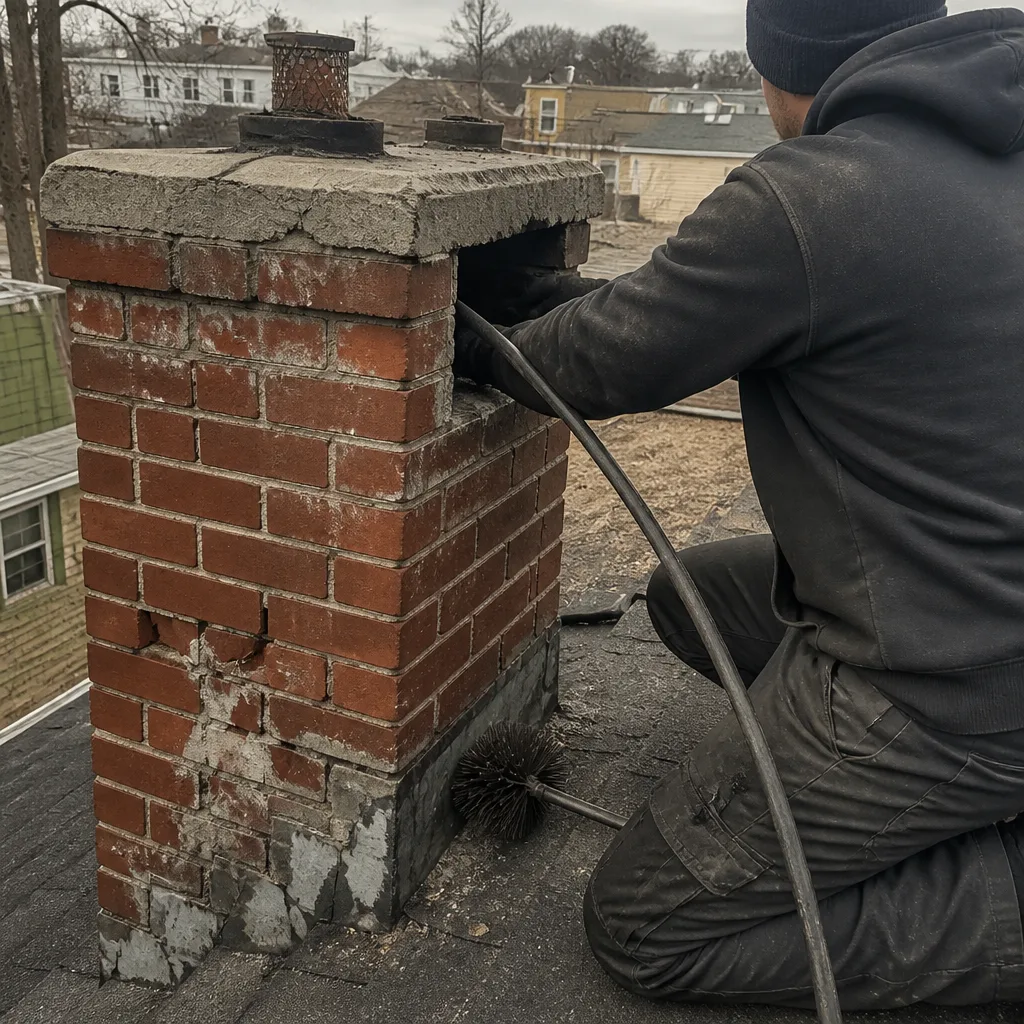 Before
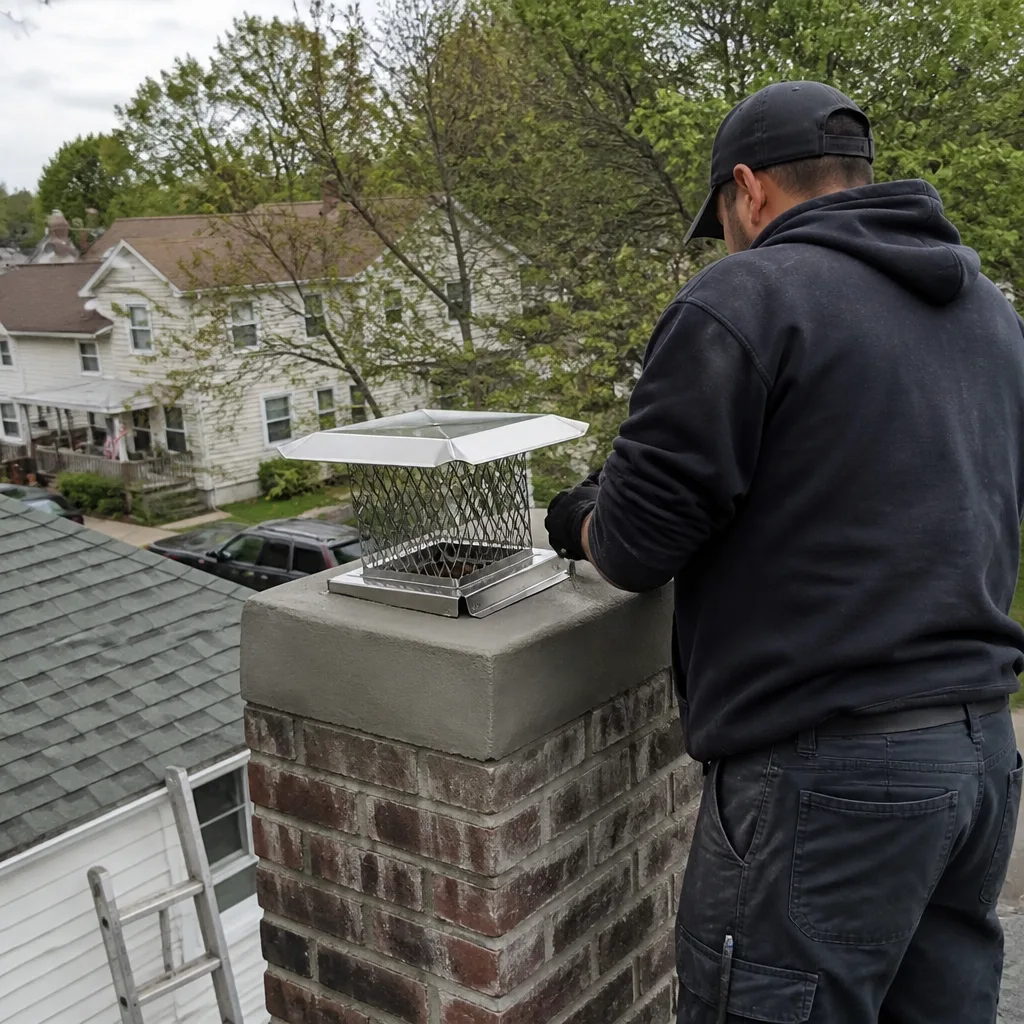 After
After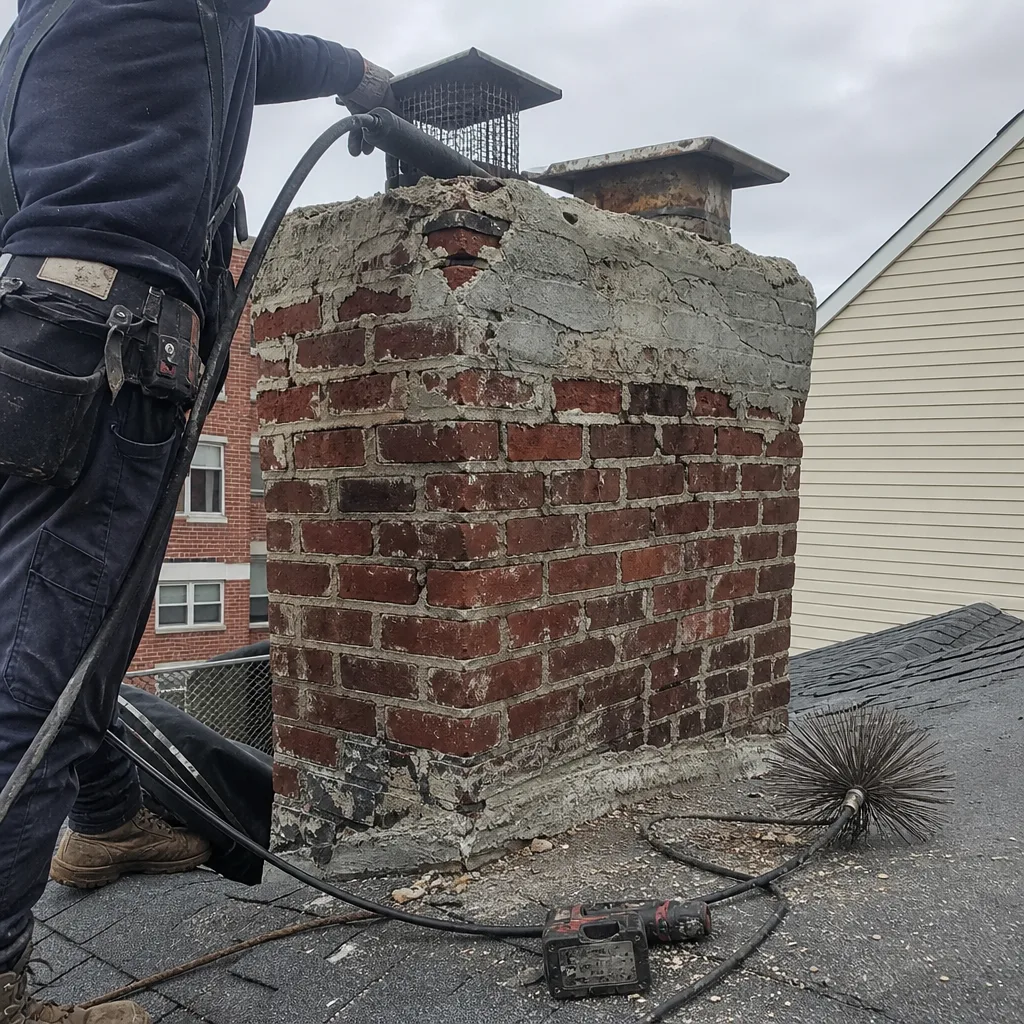 Before
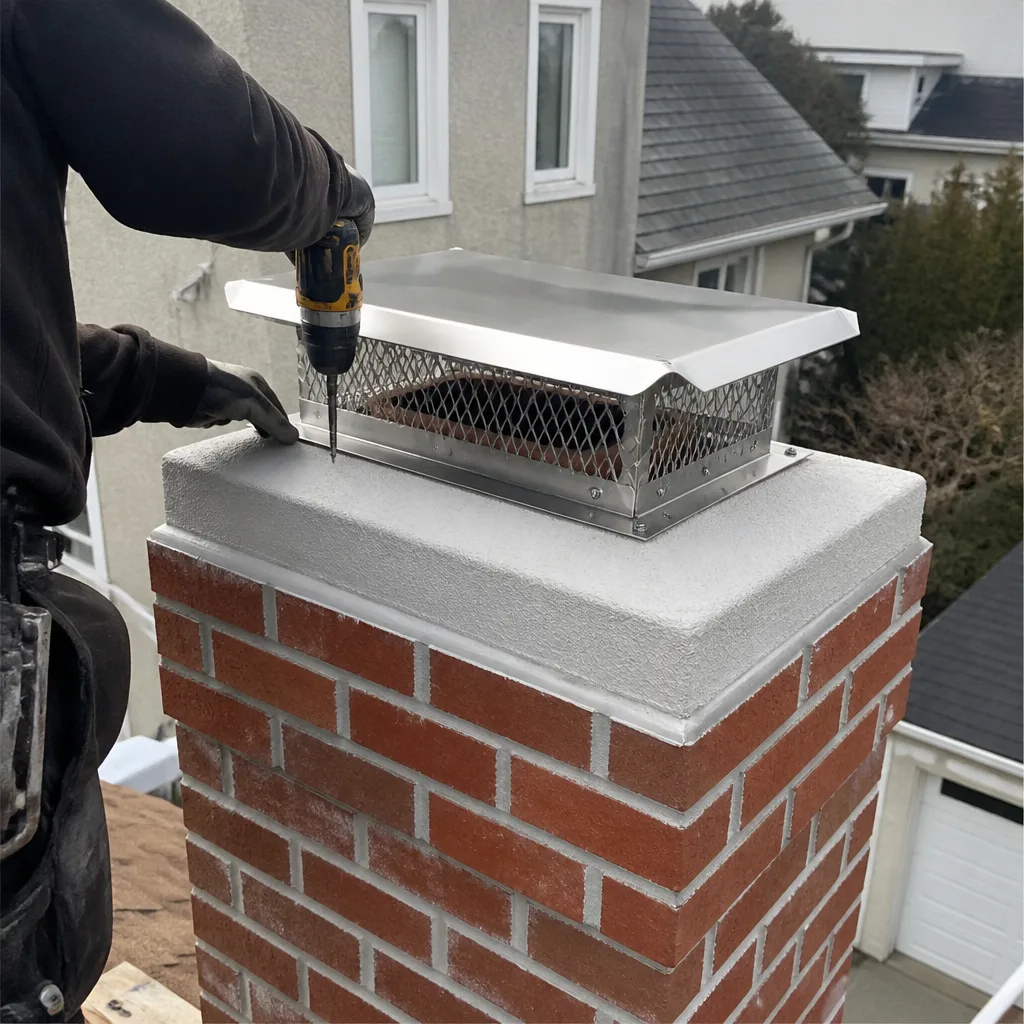 After
After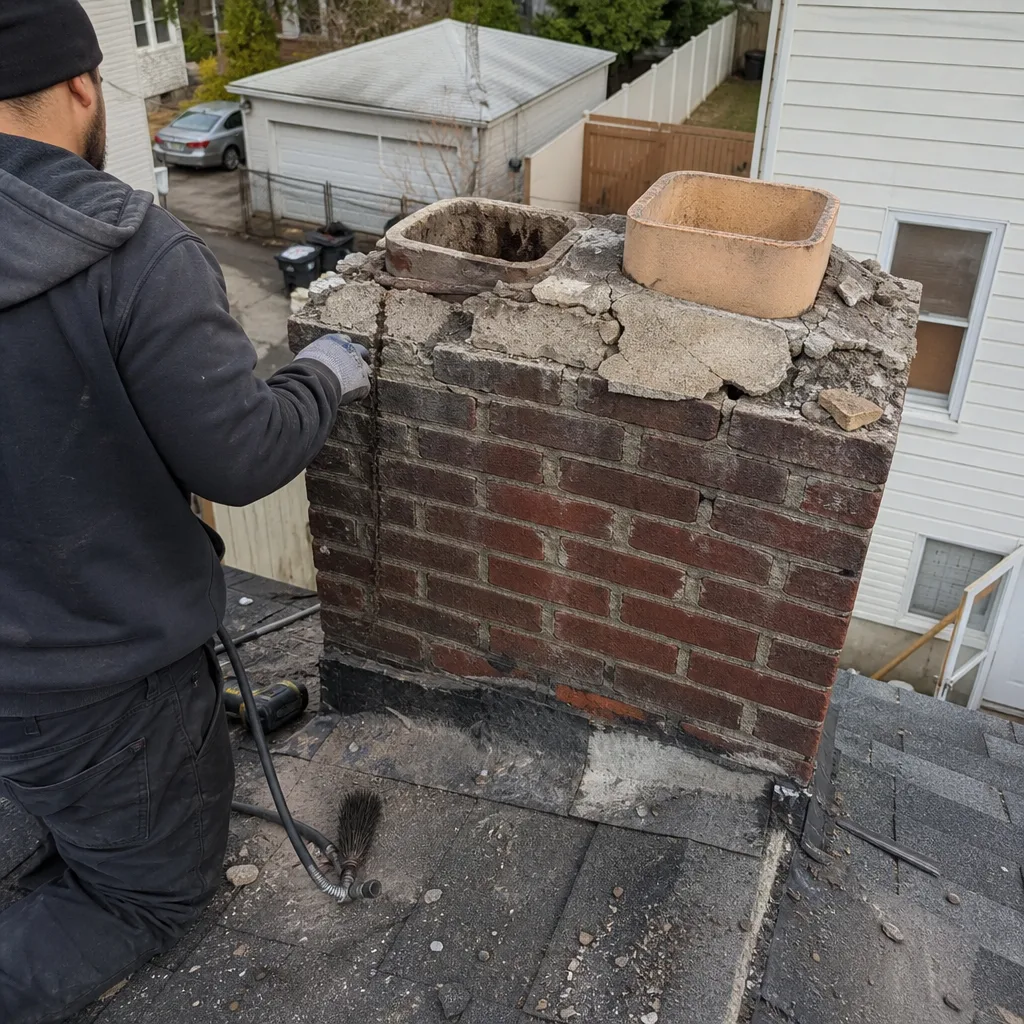 Before
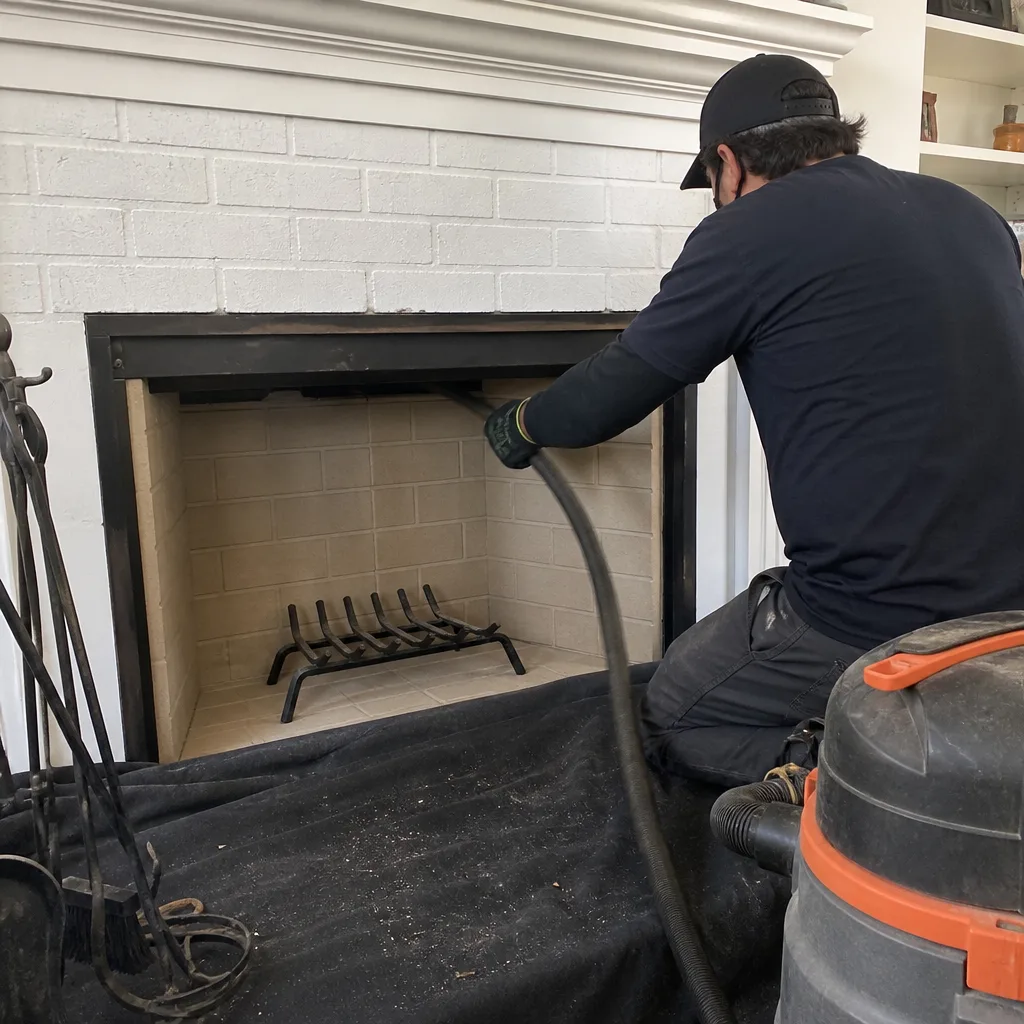 After
AfterFrequently Asked Questions
A standard professional chimney sweep in Brooklyn typically costs between $180 and $340 for a single fireplace with normal creosote buildup. Homes with heavier Stage 3 buildup, multiple flues, difficult roof access, or inserts and stoves fall above that range. Some Brooklyn homes built before 1940 have unusual flue configurations that add labor time. The only way to know your exact price is an on-site estimate. Call (607) 695-6218 for a free Brooklyn quote.
Yes. New York State does not prohibit homeowners from cleaning their own chimneys. The question is not legal, it’s practical and financial. A DIY cleaning is legal but may violate the terms of your homeowner’s insurance policy if the chimney is involved in a fire claim. Many insurers require documented professional maintenance. Read your policy before you climb a ladder. If you don’t have the language handy, a call to your agent is the smartest pre-do-it-yourself step.
You need a correctly sized chimney brush with rigid extension rods, a heavy-duty drop cloth and tape for sealing the firebox, a shop vacuum with a HEPA filter, a respirator, safety glasses, work gloves, and a headlamp. You also need safe roof access with a proper ladder setup. For most Brooklyn homes, roof access is the hardest part. Total cost for first-time tool purchase runs $138 to $265. If your home requires more than a standard two-story extension ladder to reach the chimney safely, stop and call a professional.
The National Fire Protection Association recommends that chimneys be inspected at least once a year and cleaned as needed based on what the inspection finds. For Brooklyn homes that burn wood regularly during the heating season, an annual cleaning is the right cadence. If you use your fireplace occasionally, you may go 18 to 24 months between cleanings, but only if a professional inspection confirms the flue is still in safe condition. The damp Brooklyn climate accelerates creosote hardening, so don’t let it go too long.
Creosote continues to build up on the flue walls. At some point, the buildup is thick enough to ignite. A chimney fire burns at temperatures that can crack the flue liner, damage the masonry, and transfer heat to the combustible framing around the chimney. Even if you don’t get a chimney fire, heavy creosote deposits restrict draft and force combustion gases back into the living space. Carbon monoxide is colorless and odorless. Annual cleaning is the only way to know the system is still functioning safely.
Ours do. It’s part of the Cedarwell Care Promise on every Kindling Chimney Brooklyn visit. The technician arrives in uniform, puts on shoe covers at the door, lays down drop cloths around the fireplace and the access path, and takes a photo of the clean-up before leaving. Nothing is moved without asking first. If you have kids, pets, or specific concerns about the work area, tell us when you call. We plan every job around treating the house as a home, not a work site.
The Bottom Line
For the rare Brooklyn home with a straight flue, light Stage 1 creosote, and a clean professional inspection on file, a DIY chimney cleaning is a legitimate annual maintenance option. For everyone else, which is nearly all of Brooklyn’s housing stock, the professional route is the cheaper decision when you factor in risk, insurance, warranty language, and the problems a brush cannot see. The line between DIY and professional is not about whether you’re capable. It’s about whether you can see what needs to be seen. If you can’t see it, you can’t clean it. Call (607) 695-6218 for a free estimate, a straight price, and a team that treats your home the way you’d want a neighbor to treat it: carefully, honestly, and with proof of the work.
Written by Danny Cortes, Owner at Kindling Chimney Brooklyn, serving Brooklyn since 2003.